
Pigmentos Químicos
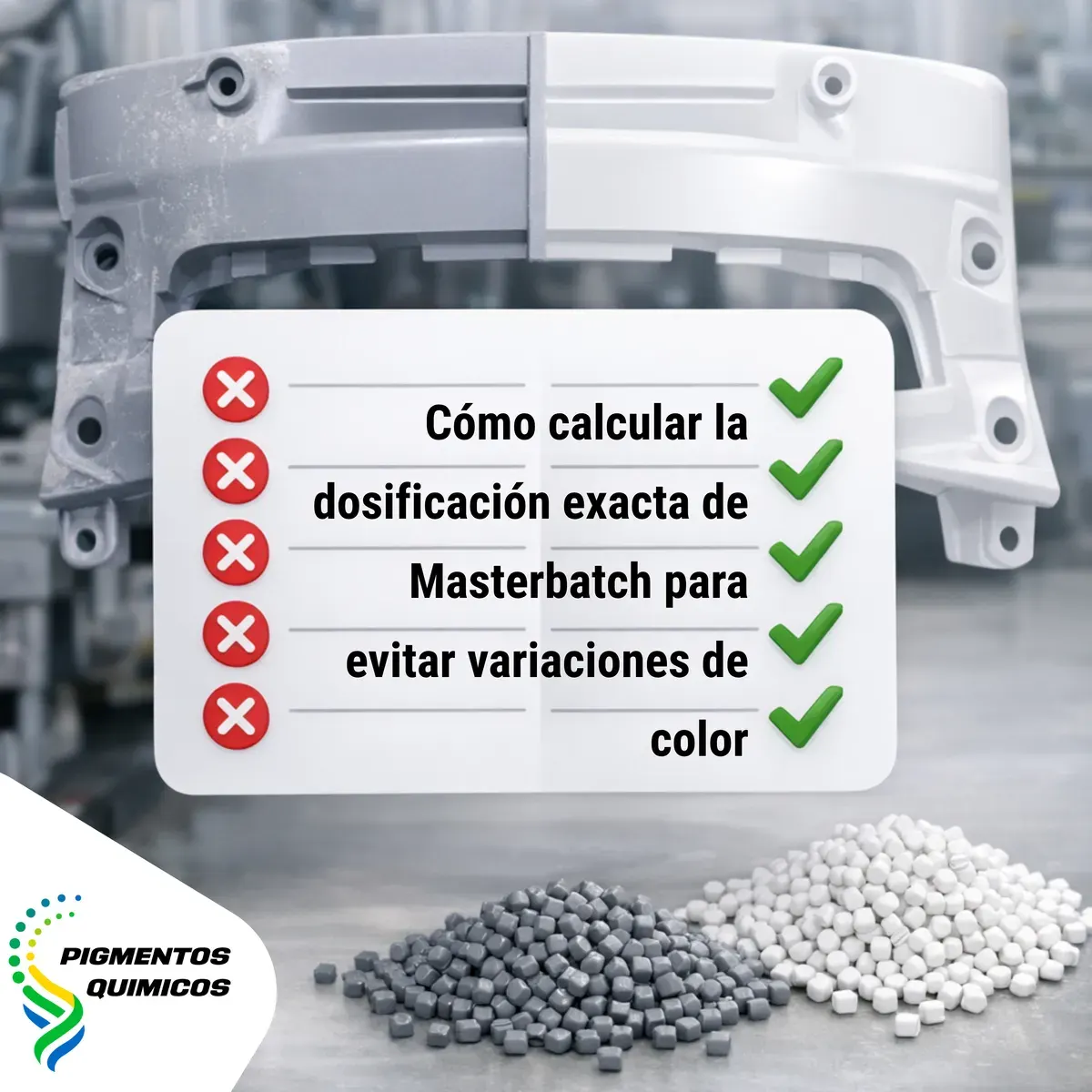
Cómo calcular la dosificación exacta de Masterbatch para evitar variaciones de color
Technical· 4 min read

How to Calculate the Exact Masterbatch Dosage to Avoid Color Variations

In plastics processing, precision is the difference between an approved batch and a mountain of waste. Masterbatch demands rigorous dosing control to ensure the same tone in every part produced.

In plastics processing, precision is the difference between an approved batch and a mountain of scrap. Masterbatch demands rigorous dosing control to guarantee that the shade is identical from the first to the last manufactured part. A common error is making approximate calculations or not considering the LDR (Let-Down Ratio), which results in inconsistent chromatic variations and a negative impact on cost structure.

The Let-Down Ratio (LDR) Concept

The LDR is the recommended technical proportion of masterbatch to be integrated with virgin resin. It is generally expressed as a percentage (%) and determines the pigment loading necessary to reach the target color without saturating or weakening the properties of the polymer.

For example, an LDR of 2% indicates that, for every 100 parts of total mix, 2 parts correspond to masterbatch and 98 to base resin.

The Dosing Formula

To obtain the exact kilograms of color concentrate needed for a production order, the following relationship must be applied:

kg of Masterbatch = (Total production in kg × LDR%) ÷ 100

Variables That Affect Physical Precision

Even with the correct mathematical calculation, operational factors on the production floor can cause color variations:

Bulk density: Not all masterbatches have the same volumetric weight. When changing formulation or supplier, it is vital to recalibrate the feeders to ensure that the discharged volume is equivalent to the calculated weight.
Volumetric vs. Gravimetric dosing: Volumetric systems (by screw) are sensitive to changes in pellet size. Gravimetric systems (by weight) offer superior precision by automatically compensating for density variations.
Separation effect: In manual blends inside the hopper, masterbatch can migrate to the bottom due to machine vibration, generating darker parts at the start and lighter ones at the end of the batch.

Strategies to Maintain Chromatic Stability

To ensure color repeatability in each shift, the following technical protocols are recommended:

Batch calibration: Verify the weight of one feeder discharge at the start of each new masterbatch bag.
Use of static mixers: These components ensure that pigment distribution is homogeneous before the melt enters the mold or extrusion die.
Recycled resin compensation: If the process integrates recovered material, note that it already carries a prior chromatic loading. The dosage of virgin masterbatch must be adjusted to neutralize or complement the tone of the recycled content without exceeding opacity limits.

Ready for the ideal color?

Let's talk. We'll send you a proposal as soon as possible.

WhatsApp us
ISO 9001:2015 Certified

Certification
ISO 9001:2015

Audited and validated processes under international quality standards. Every batch traceable, every color repeatable.

30 Years Anniversary

30 years
making color

30 years specializing in masterbatch, pigments, and high-quality additives for injection, extrusion, and blow molding.

Authorized PANTONE Partner

Authorized
Partner

Color matching referenced to the Pantone system.